The World of Lathmar

The living record

The Peoples of Aeltharion

Ten peoples shaped by old wars, distant homelands, and the choices of the present age.

The histories below are not character statistics. They are the memories each people carries into Lathmar, and the reasons they do not all see the same world when they look upon it.

The peoples index

Choose a record

Select a people to open its account. Only one record is shown at a time.

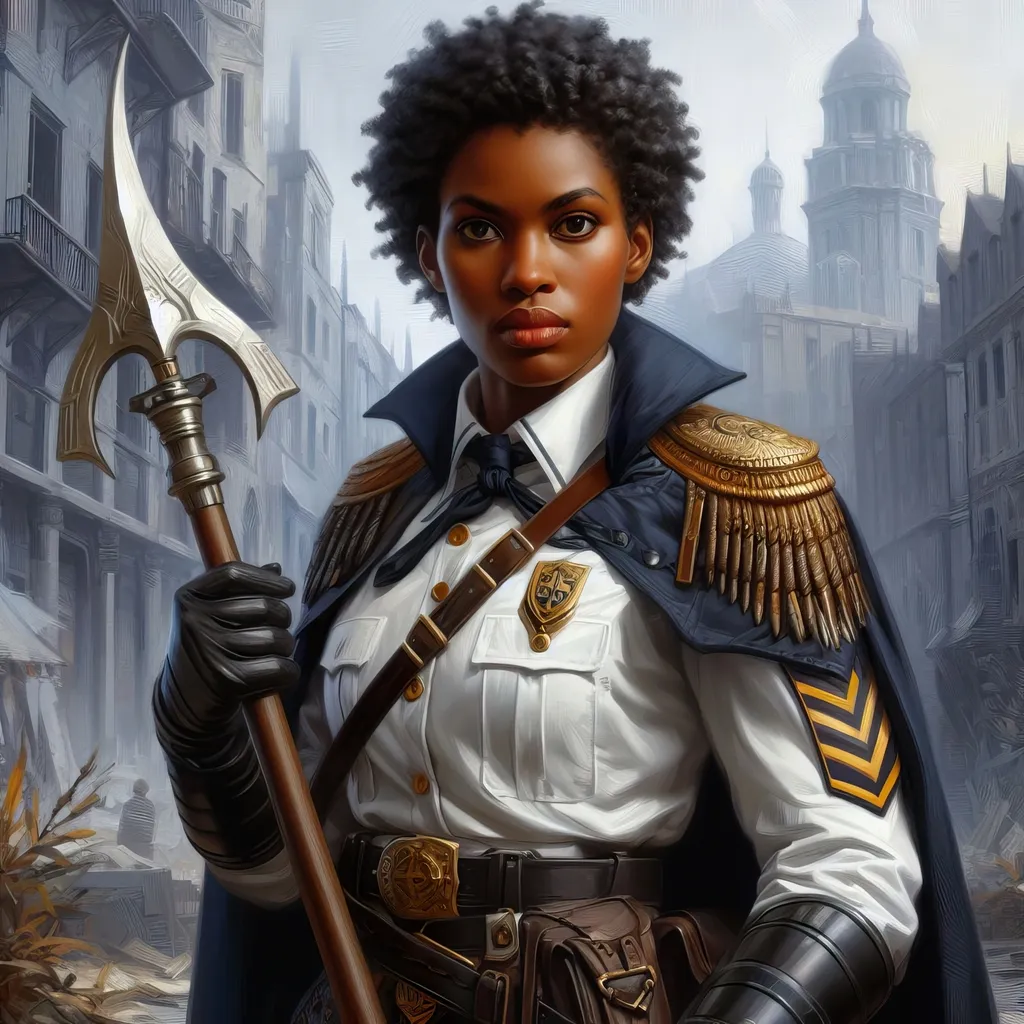
01 People of AeltharionHumansHeirs of the Eastern Cape
A Human adventurer from Lathmar
Human · Heir of the Eastern Cape

No surviving account agrees on how the first Humans reached Aeltharion. Some traditions speak of ships appearing beyond the eastern cape. Others describe a gate that opened from another realm. The oldest Human records begin only after the crossing, when the newcomers founded Kaapstad and made the coast their own.

From Kaapstad into the continent

Kaapstad became the first great Human city and the starting point of their expansion. Human settlements spread westward within a few generations. Roads followed the farms, forts followed the roads, and new rulers claimed lands that had seemed distant to their parents. Their short lives made them impatient beside Elves and Dwarves, but that same impatience let them recover from losses that would burden an older people for a century.

The Elves first received them as guests. They granted the newcomers land in the east and watched their settlements grow into kingdoms. What began as wary cooperation eventually became a shared realm. A line of half-elven rulers joined Human kingdoms and Elven clans beneath a ruling pair, and for a time the union held more of the continent together than any power before or since.

The empire and the spear

Human tradition places the Spear of Destiny near the heart of this rise. It is said to have come from the gods of Men, though no record explains which gods bestowed it or how it entered the world. Dwarven and Elven accounts begin only when the weapon was already in Human hands. Its origin remains as uncertain as the first crossing at the cape.

The spear later helped seal the corruption beneath Kragmor. The record does not say whether it crossed into Aeltharion with the first settlers or entered Human hands afterward. Like the crossing itself, its beginning remains hidden.

A realm broken at the desert

The shared empire began to fail when Human ambition reached the lands of the Kataxi. Missionaries, traders, and settlers crossed agreements that the desert clans considered binding. The first war ended through mediation. A later generation repeated the offence and opened the steppe to settlement. The Kataxi answered by destroying an imperial border city, and the argument over retaliation split the Human and Elven rulers who had once governed together.

That fracture never truly healed. The Human lands became a patchwork of duchies, cities, and competing houses. Some still look back to the shared empire as their highest achievement. Others remember only that Elven caution restrained Human power at the moment it should have struck.

Humans in the present age

Modern Human realms contain both the loudest opponents of slavery and many of its willing customers. In several duchies, bondage is hidden behind the gentler phrase “life debt.” Ithrax traders supply laborers and captives, while Human merchants and nobles provide coin, protection, and markets. The arrangement has drawn Skarn workers and soldiers far beyond the southern swamps.

Humans arrive in Lathmar carrying all of these contradictions. They adapt quickly, build institutions wherever they settle, and rarely agree on what their own history requires of them. Their origin is unknown, their old empire is gone, and the weapon said to prove their divine favor lies bound to a wound beneath the earth. They continue nonetheless, certain that whatever the next age becomes, they will find a place within it.

Return to the peoples index ↑
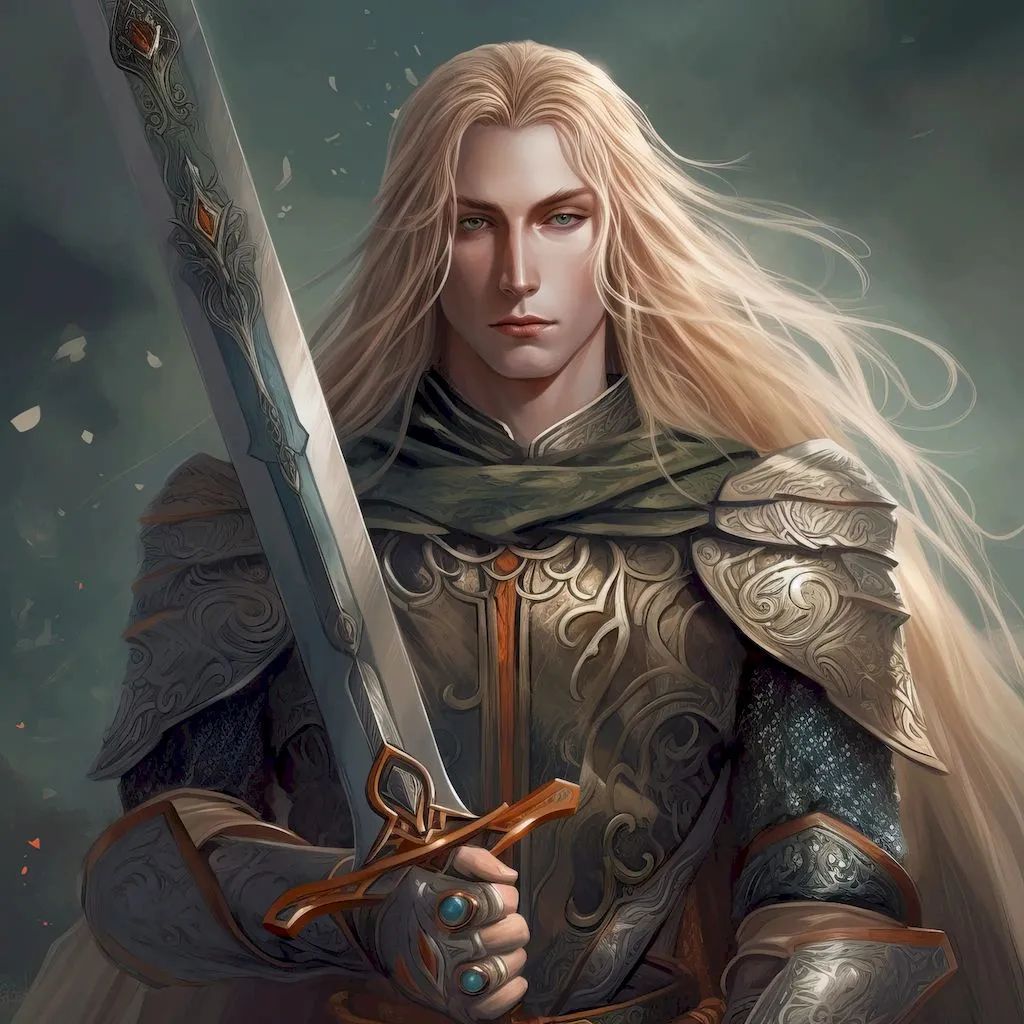
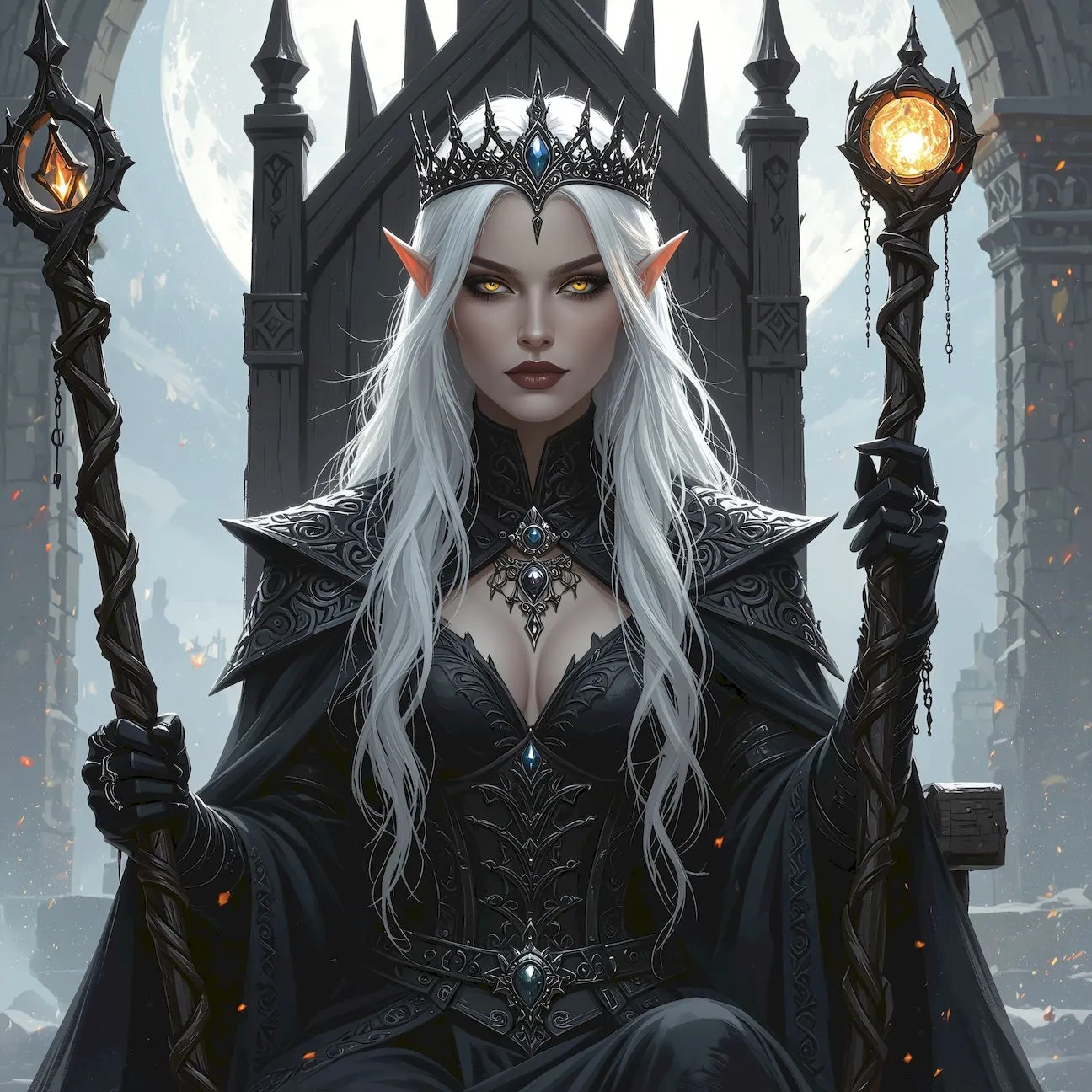
02 People of AeltharionElvesKeepers of the Living Realm
An Elf from Aeltharion
Elf · Keeper of the Living Realm

To speak of the Elves as a single people is convenient, but not quite true. High Elves and Wood Elves share their realms, their long memory, and much of their history. The Deep-Elves share the same beginning, yet their path turned beneath the earth and became a history of its own.

High Elves and Wood Elves

High Elves are tall and fine-featured, at home among old towers, libraries, and the disciplined practice of magic. Wood Elves are somewhat smaller and more robust. They live closer to the great forests and express their craft through living wood, careful husbandry, and a practical understanding of the land.

Neither rules the other. Their realms are guided by the Bound Sovereigns, a ruling pair advised by four further pairs of elders. The form reflects an Elven belief that lasting authority cannot rest safely in one voice. Partnership is not merely a private bond among them; it is part of how power is restrained.

The work of restoration

Elves lived in Aeltharion before the arrival of Men. After the war between giants and dragons, they used magic to restore forests, renew wounded valleys, and raise cities of stone and living wood. Their oldest realms were built to remain part of the landscape instead of replacing it.

They traded with the Dwarves for metal and gemstones, and many surviving artefacts came from that cooperation. The discovery of Mithril changed the relationship. Elves found the first known vein beneath the roots of an ancient stonewood tree and held the metal sacred, yet only Dwarven smiths knew how to shape it. Trade joined the two peoples until Dwarven tunnels crossed beneath Elven land and miners took Mithril without leave.

The war that divided them

The First Dwarven-Elven War was fought above and below the earth. A Wood-Elven ruling pair pursued the retreating Dwarves into one of their holds, destroyed the Silverhammer clan, and claimed the city. The descendants of those who remained below became the Deep-Elves. Surface histories often treat that moment as an ending. For the people who lived with its consequences, it was the beginning.

The Elven realms survived the war, but their claim to harmony could no longer be innocent. They later marched beside Dwarves and Humans against the corruption under Kragmor, helped forge the seal, and carried the losses back into their forests and towers.

The long memory of the present

Elves welcomed the first Humans and later shared an empire with them through a half-elven line. The union ended when Human expansion brought war with the Kataxi. Since then, Elven realms have remained apart from Human rule, though trade and diplomacy continue.

Elves have time to remember details that younger peoples turn into legend. That memory makes them patient, but it can also become distance. An Elf who leaves the old realms carries centuries of inherited caution, the beauty of what was restored, and the knowledge that Elven hands have wounded the world as surely as they have healed it.

Return to the peoples index ↑
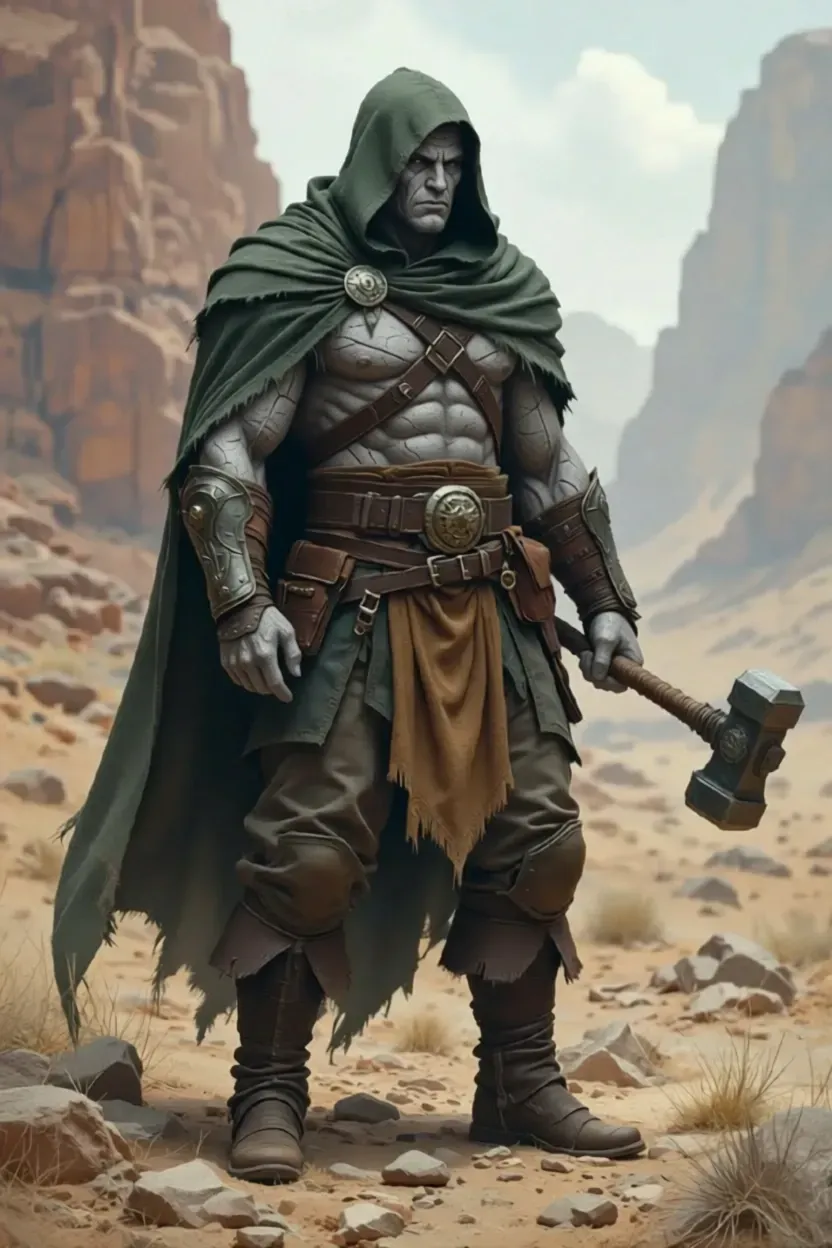
03 People of AeltharionDeep-ElvesThe Ones Who Remained
A Deep-Elf from beneath Aeltharion
Deep-Elf · The One Who Remained

Surface chronicles say that the Deep-Elves fell into darkness. The Deep-Elves tell the story differently. They remember an Elven army that followed the Dwarves beneath the plains, won a war the surface had begun, and remained where the victory left them.

What the surface calls a fall

During the First Dwarven-Elven War, a Wood-Elven ruling pair drove into the hold of the Silverhammer clan. The defenders were destroyed and the city was taken. Surface Elves record the act as the bitter end of the conflict. Deep-Elves do not deny the bloodshed, nor do they soften it. What they reject is the belief that distance absolved everyone who returned to the sun.

The people below inherited the captured hold, the dead within it, and the consequences of victory. To them, the division did not begin because darkness corrupted a blameless people. It began with the acts committed in the Dwarven hold and with the distance that later grew between those below and those who returned to the sun.

A people made beneath the earth

Generations without daylight changed them. Deep-Elves became shorter and broader than their surface kin. Their skin lost its color, while their eyes grew large enough to gather the faintest light. They learned the passages of the old Dwarven city and made a home in halls built by those their ancestors had killed.

That origin is present in everything they preserve. Dwarven stone surrounds Elven memory. Every chamber is proof that conquest can outlive the conqueror and become the world of their descendants. Deep-Elves have little patience for surface lectures about purity. They know that the graceful towers above and the stolen halls below belong to the same history.

The gate below Kragmor

When corruption rose beneath Kragmor, the war returned to the depths. Elves, Dwarves, and Humans fought to contain it, and a gate of stonewood, Mithril, Adamantium, and the Human Spear of Destiny was placed across the wound. The peoples above speak of the sealing as a victory. Deep-Elves live close enough to understand the difference between a thing defeated and a thing merely shut away.

They know the gate has held. They also know it has never healed what lies behind it. This knowledge has made them severe, suspicious of promises, and unwilling to confuse hope with safety.

The view from below

Deep-Elves do not ask to be reconciled with an image of the people they were before the war. That people no longer exists. They have their own inheritance now, formed from exile, conquest, adaptation, and an honesty the surface finds uncomfortable.

Those who travel to Lathmar often recognize something familiar in the city. It too stands above a buried wrong. It too depends on a seal and calls endurance peace. A Deep-Elf entering the Fallen Depths does not believe the darkness is empty. Their ancestors taught them that forgotten things continue to remember.

Return to the peoples index ↑
04 People of AeltharionKataxiBorn from the Sands
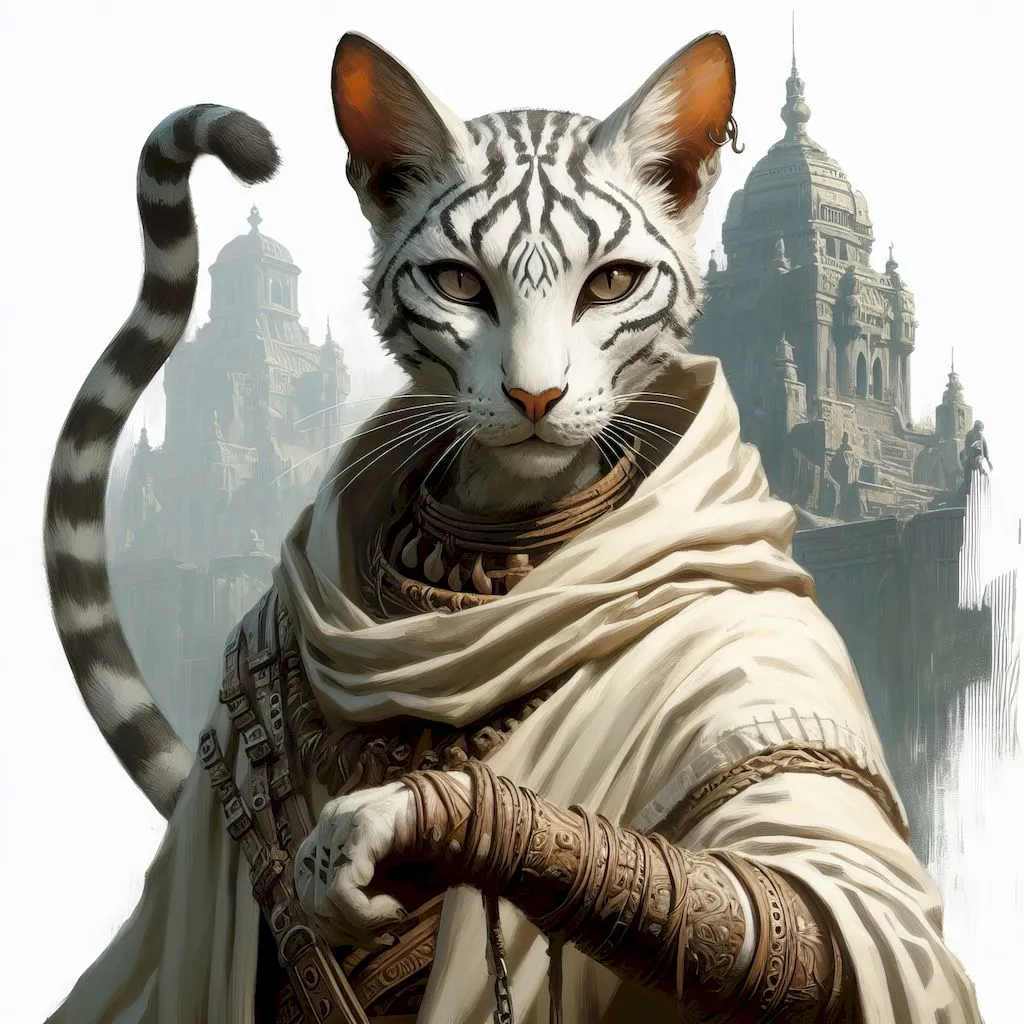
A Kataxi from the central desert
Kataxi · Child of the Desert

The Kataxi call themselves the Children of the Desert. Their true origin is unknown, and the hidden cities of the central wastes may be older than the first Human kingdoms. Outsiders rarely see enough of Kataxi lands to judge.

Within the crescent mountains

Their homeland lies on a high plateau enclosed by a crescent-shaped mountain range. The peaks catch the rain before it reaches the interior, leaving steppe and dry desert beyond. Kataxi settlements stand deep within this country, protected by distance, difficult ground, and the vigilance of the clans.

Kataxi are similar to Humans in height, but feline in feature and movement. Their fur carries patterns that identify clan and lineage. Long limbs and narrow frames suit the open country, while their tails lend balance to a people for whom speed is as much a habit as a weapon.

Clans, pride, and influence

Kataxi society appears patriarchal to hurried visitors. Kings and lords occupy the visible seats of power, yet women often guide the choices made behind them. Authority passes through family influence, obligation, and the judgment of those who remember what a public display is meant to conceal.

Pride matters greatly among Kataxi men. Disputes are common, but custom has shaped them into formal challenges rather than uncontrolled feuds. Restraint is part of honor. A Kataxi who cannot master anger is not considered powerful, only unfinished.

The wars of the Second Age

The shared Human-Elven empire brought missionaries, traders, and explorers to the edge of the desert. The Kataxi tolerated the first arrivals until outsiders tried to impose their beliefs upon the clans. The mission was destroyed, and the conflict that followed ended only through Elven and Gnomish mediation.

A later imperial ruling pair opened the steppe to Human settlement in defiance of the earlier agreement. The Kataxi returned after decades of silence and erased a border city. Human lords demanded war. Elven rulers urged restraint. The dispute broke the unity of the empire, while the Kataxi left the border duchies in ruins and withdrew behind the steppe.

A guarded place in the world

The Kataxi do not seek an empire beyond their homeland. They expect their borders to be understood without repeated negotiation, and they answer intrusion with a certainty other peoples often mistake for cruelty. The steppe remains unclaimed because no neighboring ruler has forgotten the cost of claiming it.

Young Kataxi sometimes travel beyond the desert to observe foreign peoples and test themselves against unfamiliar customs. They may admire what they find without surrendering the conviction that their own civilization needs no outside correction.

Return to the peoples index ↑
05 People of AeltharionDwarvesChildren of the Great Holds
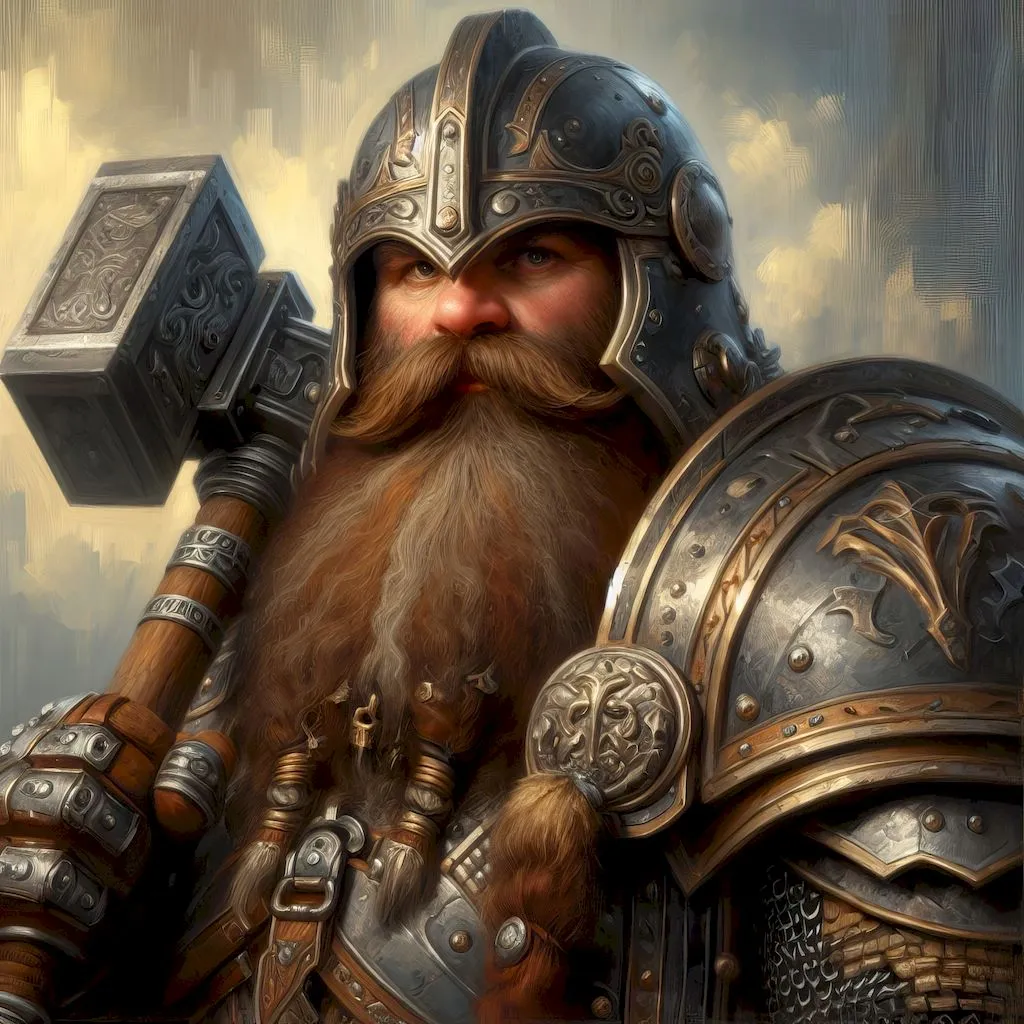
A Dwarf of Aeltharion
Dwarf · Child of the Great Holds

Dwarven greatness lies behind them. The holds that once stood beneath nearly every mountain have fallen silent, and the craft sought by every realm now survives among scattered clans. The Dwarves endure, but they no longer mistake endurance for victory.

The age of the holds

In the early ages, Dwarves stood close to giants and forged weapons for beings said to have shaped the world. Later they became builders, miners, and artisans without equal. Their halls guarded deep mines and immense forges, and their stonework carried a precision younger kingdoms could not reproduce.

The discovery of Adamantium drew them deeper into the mountains. At the same time, Elves found Mithril beneath the roots of an ancient stonewood tree. The Elves possessed the sacred metal, but Dwarven smiths knew how to shape it. For a time, need held the two peoples together.

Two wars with the Elves

Greed broke the bargain. Dwarven tunnels crossed beneath Elven lands and reached the Mithril deposits. The theft became war. Elven forces pursued the Dwarves underground, destroyed the Silverhammer clan, and occupied its hold. The settlers who remained there became the first Deep-Elves.

The defeated clans turned inward and drove their Adamantium mines deeper. Refugees crowded the city of Kragmor, seat of the Stonebreaker clan, until expansion became necessity. Miners began to disappear. Those who returned were hostile and withdrawn. The Clanmaster descended with a host to learn what had happened and did not return.

The fall of Kragmor

The Under-Dwarves rose from below and took the city. The free clans laid siege, but scouts vanished and some of their own people defected. At last the Dwarves asked Elves and Humans for aid. The second war between Dwarves and Elves was fought with both peoples on the same side, though neither had forgotten the first.

At the lowest reaches of the mines, the corrupted Clanmaster was defeated. The corruption itself could not be destroyed. A gate was forged from the greatest works of the allied peoples and anchored by the Human Spear of Destiny. Kragmor was sealed, abandoned, and left to become the wound beneath later history.

After the decline

The Dwarves never recovered their old reach. Many outer holds were deserted, the clans diminished, and no new city equaled what had been lost. Their craft remains prized, but every surviving work exists beside the knowledge of what hunger for deeper treasure cost them.

Dwarves who leave the mountains are valued for reliability and patience. They are slow to grant trust and slower to abandon an oath. Beneath Lathmar, however, even a Dwarf may wonder whether the sounds behind the stone belong to the past or to something that has been waiting for the clans to return.

Return to the peoples index ↑
06 People of AeltharionGnomesMerchants of the Known World
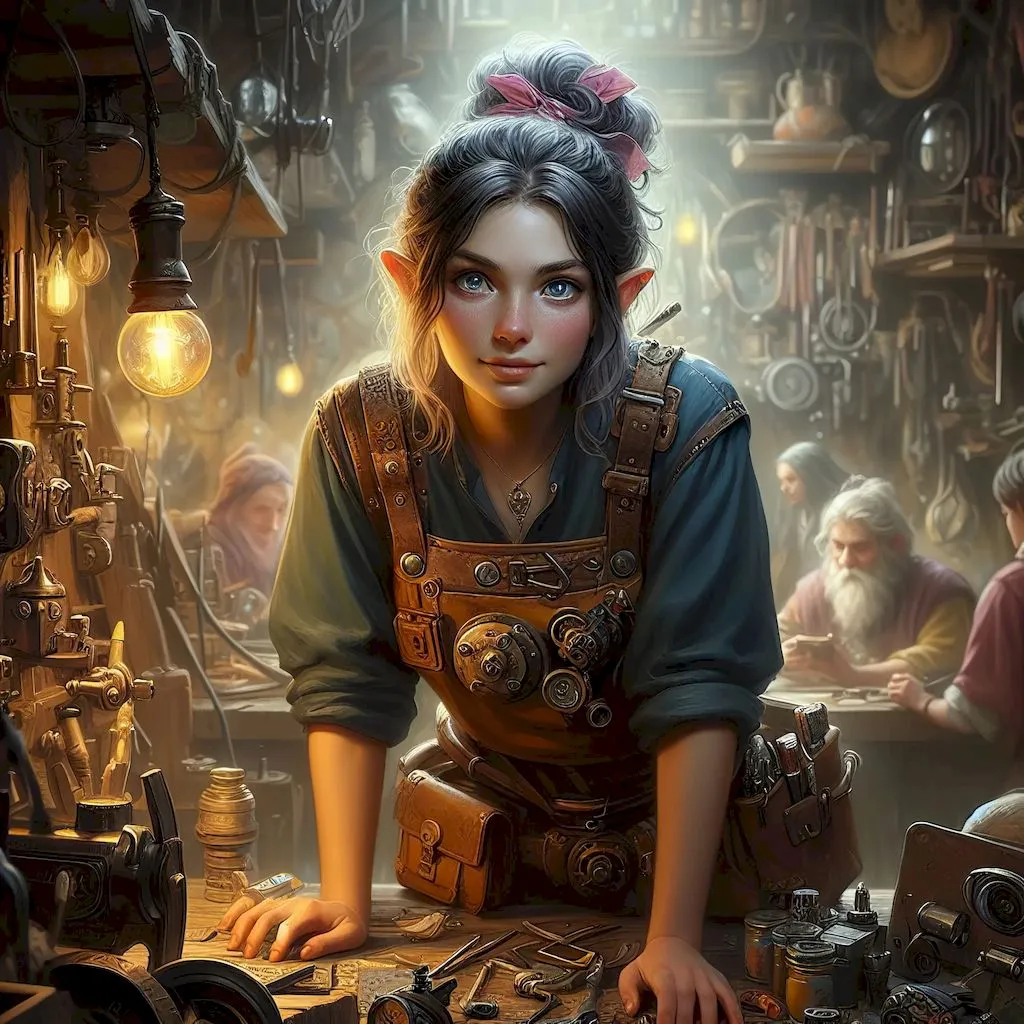
A Gnome merchant and adventurer
Gnome · Merchant of the Known World

Where coin changes hands, a Gnome is rarely far away. They live among Human cities and Elven realms without belonging wholly to either, moving goods and news across borders that other peoples approach with suspicion.

A people of the surface

Unlike Dwarves, Gnomes did not build secluded kingdoms beneath the mountains. They settled in commercial quarters, market towns, and the busy edges of foreign cities. Their skill in negotiation made them useful to rulers, while their independence kept them from becoming servants of any single crown.

They are especially known for cutting gemstones and practicing alchemy. Both crafts reward the precision Gnomes bring to work, though alchemy also satisfies their willingness to accept a measured risk when the result may justify it.

An origin without agreement

No reliable account explains where Gnomes began. Some stories place them beside the first Humans who arrived at the eastern cape. Others claim they were already scattered across the continent and became visible only when cities and long-distance trade gave them a common place in the world.

Comparisons with Dwarves are unwelcome. Similar stature has encouraged outsiders to invent a kinship neither people recognizes. Dwarves define themselves through stone, clan, and continuity. Gnomes are more comfortable with movement, opportunity, and arrangements that can change when the market does.

Families of enterprise

Gnomish families are part of wider commercial networks. Men and women hold equal standing in craft, trade, and decision-making. Authority usually follows proven success rather than inheritance alone, and a respected elder is expected to understand accounts as well as ancestry.

Young Gnomes leave home to complete an enterprise of their own. Profit matters, but so does judgment: choosing a venture, surviving failure, and returning with proof that they can take responsibility for an agreement. Only then are they treated as full members of the economic community.

Between divided realms

Gnomes carried trade between Human and Elven lands after their shared empire fractured. They pass through places where old grudges make official envoys unwelcome and keep useful relationships alive without pretending friendship exists where it does not.

In Lathmar, this talent places them close to every expedition. Supplies, rare materials, rumors, and recovered objects all need a buyer, a seller, or someone able to tell one from the other. Gnomes seldom rule the age, but little in it moves for long without them.

Return to the peoples index ↑
07 People of AeltharionIthraxMasters of Dominion
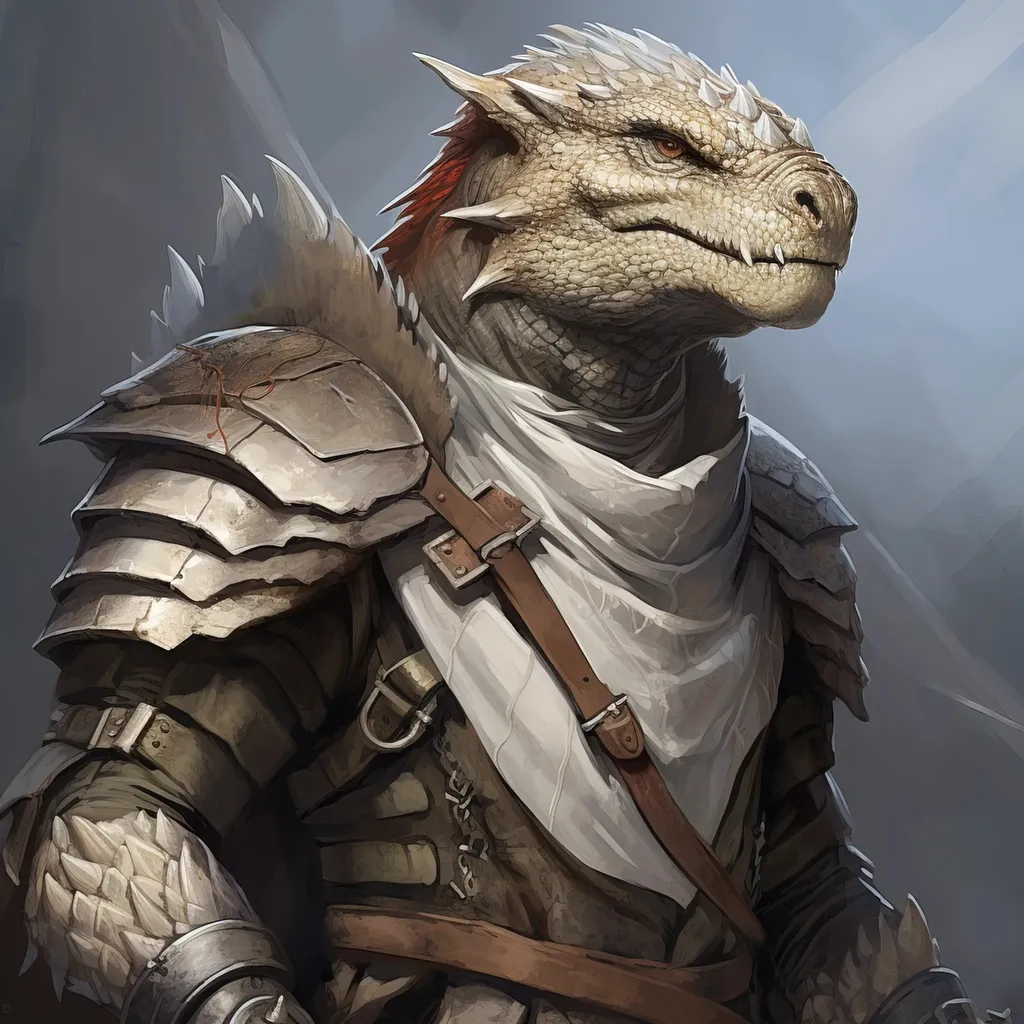
An Ithrax from the southern swamps
Ithrax · Master of Dominion

The Ithrax thrive beneath the open sky. They do not hide their power in ruined temples or forgotten caverns. In the southern swamps, domination is a craft practiced in daylight and refined across generations.

Hunters of the southern wetlands

No record preserves their beginning. Their homeland lies south of the Central Massif, where broken clouds release their rain across jungles and marshland. Ithrax tradition offers little to outsiders, though some scholars place their earliest ancestors near the age of the war between giants and dragons.

Their bodies still suggest predatory origins: powerful legs, clawed feet, and a heavy tail used for balance. Yet physical force is not what secured their rule. The Ithrax learned to command beasts, cloud judgment, and bend the will of other beings until resistance ceased to matter.

Strength kept in chains

The Skarn have served the Ithrax for as long as either people remembers. Ithrax accounts do not describe the relationship as slavery. They speak of purpose, order, and a place assigned according to nature. Elves and many Humans use a less forgiving word.

Skarn hands raised settlements, monuments, and great structures in the jungle. They labor, fight, and supervise other captives. Some live in villages that appear free until the Ithrax require service again. The system survives because control has been made ordinary, passed from master to overseer until no single chain seems responsible for the whole.

Unity without a throne

The Ithrax have no known kings or public court. Outsiders have searched for a ruler whose death might divide them and found none. Their communities act with a unity that suggests shared instinct, hidden influence, or a form of command not visible to foreign eyes.

They learn quickly and live with urgency. Ithrax who leave the southern realms often seek new forms of influence rather than land. A city, guild, or household already built by others is more useful than a kingdom that must be raised from empty ground.

The trade beneath Lathmar

The divisions of the Human realms have given the Ithrax willing partners. Several duchies accept captives and Skarn labor under the name of life debt. Merchants profit, nobles receive obedient workers, and each participant claims the arrangement began elsewhere.

Exiled Ithrax have carried the trade into the depths beneath Lathmar. Slave pits, arenas, and hidden markets persist despite repeated attempts to clear them. The breaking of distance has only widened their reach: doors open where they should not, and new victims enter passages already controlled by those who know how to take a will apart.

The Ithrax are dangerous because cruelty is not required for what they do. They need no rage and no public triumph. Control is enough.

Return to the peoples index ↑
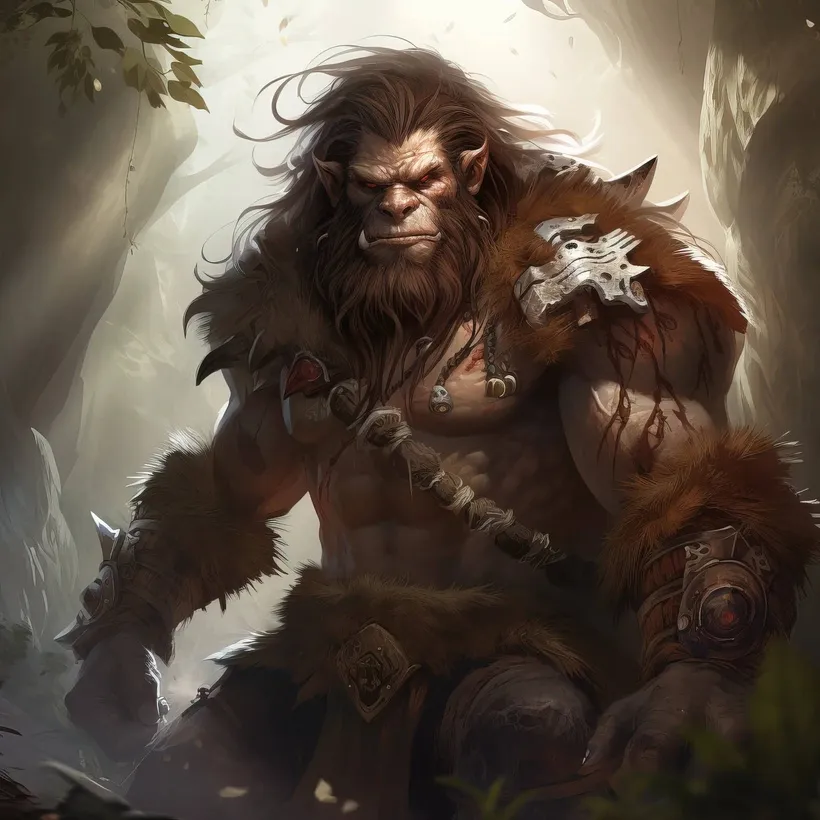
08 People of AeltharionOromunBorn from Stone
An Oromun from the northern mountains
Oromun · Born from Stone

The Oromun are the smallest of the giant-descended peoples and the only one known to have preserved a settled civilization. They carry the age of elements in their bodies, long after the empires of giantkind vanished from the world.

After the war of giants and dragons

Giants once raised fortresses from mountains and hardened sand. Dragons ruled through hunger and ancient will. Their war ended both dominions and drove the survivors into remote places. Most giantkind now lives in isolated families or solitary ranges. The Oromun remained together.

Their villages stand near the feet of great mountain chains, most often north of the Central Massif. Several hundred may live in one settlement. Contact with outsiders is limited, though encounters with the Kataxi are known.

The patience of stone

An Oromun towers above most other peoples. Hardened skin grows like bark and rock across the body, giving rise to the name “Born from Stone.” Their great strength is matched by deliberate movement and a pace of thought that younger peoples often mistake for dullness.

Oromun lives are measured across centuries. A young Oromun can seem awkward or slow to those who expect decisions within a Human span. Age brings calm and insight, not haste. Their communities value endurance because they remember a world in which mountains themselves were weapons.

Mystics and the older world

The Mystic holds a central place among the Oromun. The role binds village life to the old forces of earth and stone and preserves what little giant memory survived the elemental war. Oromun have no interest in rebuilding a giant empire. Their traditions are concerned with remaining in balance with the land that sheltered them.

Those who leave

Most Oromun avoid the wider world. A few young people depart through curiosity or a calling they cannot explain. In foreign lands they are often treated as living siege weapons before anyone learns to speak with them.

An Oromun who joins an expedition brings more than physical protection. Their presence carries a remnant of the world before Elves, Dwarves, and Humans claimed the ages for themselves. Stone remembers on a scale few others can understand.

Return to the peoples index ↑
09 People of AeltharionSkarnUnfree by Birth
A Skarn from the southern swamps
Skarn · Unfree by Birth

The Skarn did not choose their place in the world. For generations they have been born into service, their strength claimed by the Ithrax before they are old enough to understand what freedom might mean.

A history kept by voice

No written Skarn history explains where they came from or how their bondage began. The Ithrax forbid them from keeping records. What remains passes from speaker to listener in fragments, changing as families are separated and communities are moved.

Their great bodies resemble the trolls and ogres of older tales, but resemblance is not proof of descent. Skarn identity begins with the people alive now, not with names outsiders use to make them easier to classify.

The southern homeland

Skarn come from the wet country south of the Central Massif. Jungle and marsh cover the land, fed by rain released as clouds break against the mountains. Independent Skarn communities are simple and communal. Survival matters more than rank, and strength is valued for the work it can do rather than as a right to rule.

Human settlement changed parts of the region. Forest was cut, swamp drained, and new holdings raised with Ithrax assistance. Much of that labor came from Skarn hands.

Chains made ordinary

The Ithrax use Skarn as workers, soldiers, and overseers. Control is maintained by force, but also by generations of dependence. Many Skarn have been taught to trust the authority that owns them. Escape can leave a person in a world whose bargains, suspicions, and written laws were all designed by others.

Some free Skarn villages survive, though they remain vulnerable. Elsewhere, Skarn supervise Goblin and Orc captives for Ithrax masters or Human customers. In that role they are both victims of the system and part of the machinery that keeps it running.

Beyond service

Young Skarn sometimes leave the south in search of a different life. Their loyalty is easily exploited, yet it should not be confused with weakness. A Skarn who finds companions worthy of trust may defend them with the same strength once demanded by a master.

In Lathmar, they enter a city that condemns slavery in public while profiting from it below. Every free Skarn who walks its streets is evidence that bondage was never their nature, only the condition imposed upon them.

Return to the peoples index ↑
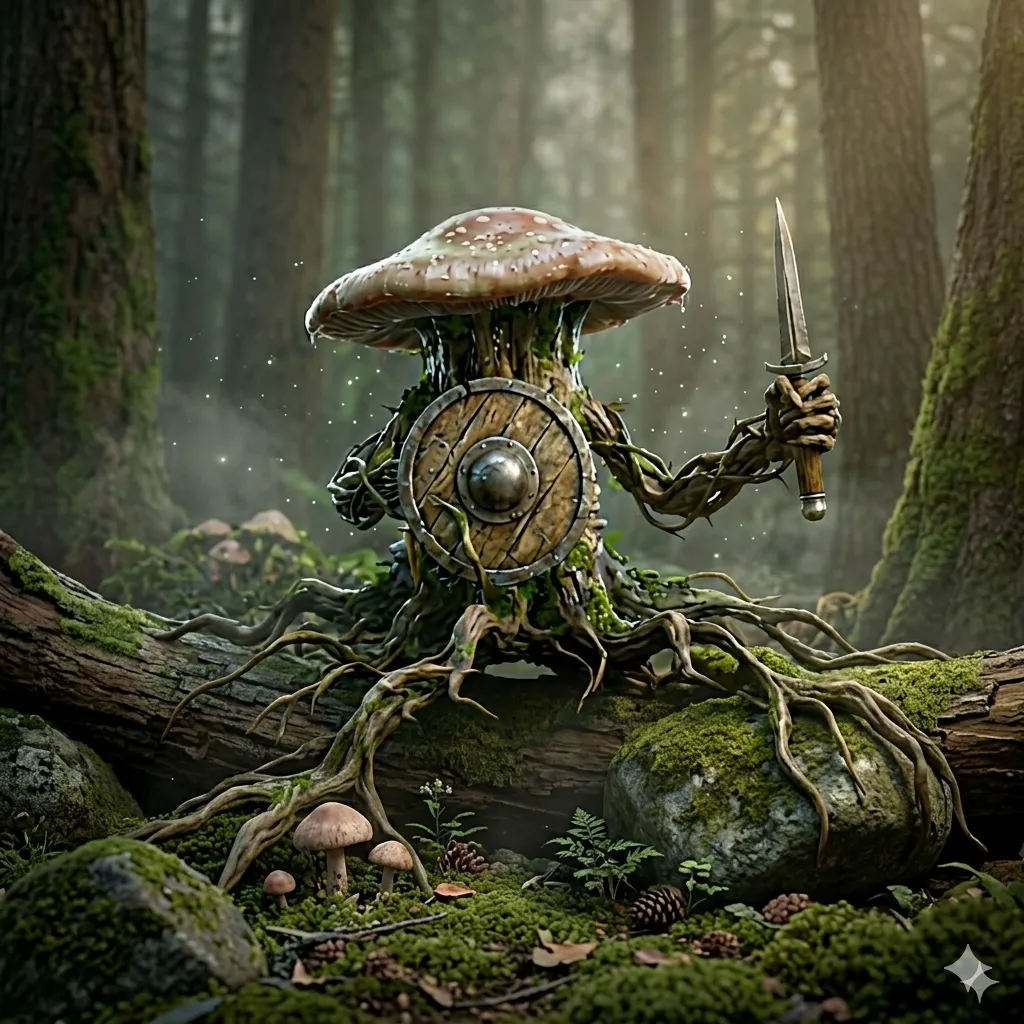
10 People of AeltharionLignariKeepers of the Silent Mycelium
A Lignari shaped by root and fungus
Lignari · Keeper of the Silent Mycelium

The Lignari are living memory grown from the deep earth. They are born within fungal networks beneath ancient roots and understand life as a passage between growth and decay, not a contest between good and evil.

The Great Mycelium

Lignari consciousness is bound to a vast network beneath the soil. Through the Great Mycelium, they sense the world as a connected process. Death returns substance to new life. Healing preserves what the larger balance still requires. Neither act needs mercy or malice.

This makes them difficult companions for peoples who expect moral judgment to begin with individual feeling. A Lignari may save a life without affection or allow one to end without hatred. What appears cold is an understanding formed outside the boundaries of a single body.

A form beyond flesh

A Lignari resembles a living stump covered in moss, fungus, and trailing growth. A broad cap rises above the body. No eyes or ears are visible, yet they perceive movement through the ground and changes in the living world around them.

They move with roots and coiling tendrils. Strong vines can be woven into arms capable of handling tools and weapons, an adaptation learned from observing humanoid peoples. Their bodies draw nourishment directly from organic matter, whether living or dead.

Kin to the wild Namana

The Lignari are the aware kin of the wild Namana. Their intelligence is systemic rather than linear. They notice patterns, cycles, and disturbances where another mind looks for a single cause. Their communities are decentralized and hard for outsiders to recognize. What appears to be a solitary being may be listening to a network extending far beyond the visible forest.

At the edge of history

Lignari do not build kingdoms or claim territory through war. They have existed beneath forests and among roots while the surface raised empires, divided borders, and renamed the ages. The Great Mycelium retains traces of what passed above it without sharing the pride of those who made the record.

A Lignari who travels with adventurers is never entirely alone. Beneath Lathmar, where corruption twists living matter and old passages cut through forgotten soil, that connection may reveal changes long before other senses find them. Whether the warning arrives in time is a question the Lignari does not answer quickly.

Return to the peoples index ↑

One world, many memories

No people enters the depths alone.

Every expedition carries old alliances and older injuries beneath Lathmar. The dungeon does not erase those histories. It places them in the same narrow passage and waits to learn what survives.

Read the Chronicle of Aeltharion